
When looking for a flat, most buyers think about price, location, and size. But there is one more question that almost every Indian homebuyer asks at some point — which floor is best as per Vastu?
It is a fair question. Vastu Shastra has guided home decisions in India for centuries, and its principles apply just as much to apartments as they do to independent houses. Different floors carry different energies, and choosing the right one can make a real difference to the comfort and harmony of your home.
In this guide, we break down which floor is better in an apartment according to Vastu, explain what each floor offers, and help you make a decision that suits both your lifestyle and your Vastu needs.
Does Vastu Apply to Apartments?
Many people believe that Vastu Shastra only applies to independent houses built on open plots. This is a common misconception.
Vastu applies to any space where people live — including flats and high-rise apartments. The direction your flat faces, the placement of rooms, the position of the main door, and the floor you live on all influence the energy inside your home.
The floor you choose is particularly important because each level of a building is connected to a different natural element. These elements — earth, water, fire, air, and space — affect the energy balance of your home and, by extension, the well-being of those who live in it.To understand how these directions and elements work together, refer to our detailed Vastu chart for home directions guide.
Which Floor is Best According to Vastu — Floor-by-Floor Breakdown
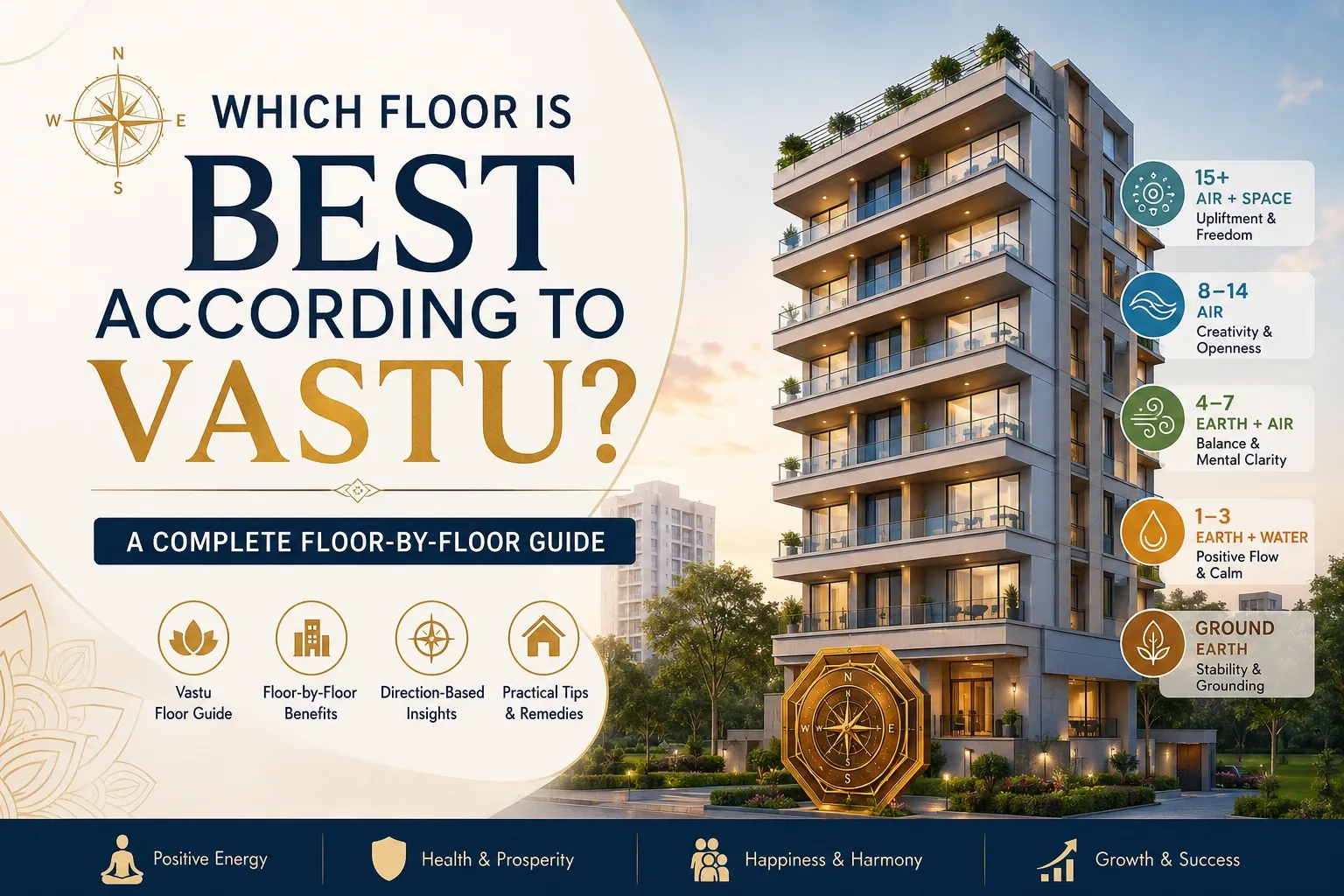
There is no single floor that is universally perfect for everyone. Vastu looks at the energy associated with each floor and matches it to the needs of the people living there. Here is what each floor level offers:
Ground Floor
The ground floor has the strongest connection to the earth element. This makes it very stable and grounding. Families with elderly members or young children often find the ground floor the most comfortable, both practically and from a Vastu standpoint.
Vastu benefits:
- Strong earth energy promotes stability and a sense of security
- Good for people who prefer a calm and rooted lifestyle
- Ideal for those who need easy access, such as elderly residents
Things to keep in mind:
- Ground floors can be noisier due to proximity to the street
- Privacy and security need extra attention
- Moisture and dampness can be a concern if the building is not well-constructed
1st Floor to 3rd Floor — Most Recommended as per Vastu
If you are wondering which floor is best as per Vastu in a straightforward sense, the answer for most people is the first to third floor. These floors are considered the most auspicious because they balance the earth and water elements.
They are close enough to the ground to stay connected to earth energy, but elevated enough to avoid the noise and dampness concerns of the ground floor.
Vastu benefits:
- Strong positive energy flow that supports health and prosperity
- Good balance between stability and ventilation
- Well-suited for families, especially those with young children
- Encourages harmony and peace within the home
Best for:
- Families looking to settle long-term
- Newly married couples starting a new chapter
- Those who value a grounded, balanced home environment
4th Floor to 7th Floor — Balanced and Practical
The middle floors of an apartment building are where earth and air elements meet. This balance makes them very suitable for working professionals who need mental clarity and focus.
These floors are high enough to enjoy natural light and cleaner air, while still maintaining a reasonable connection to the earth element. Many Vastu experts consider the 4th to 7th floor an excellent choice for urban apartment living.
Vastu benefits:
- Good mix of earth and air energy promotes mental clarity
- Better natural light and ventilation compared to lower floors
- Less street noise, making them quieter and more peaceful
- Suitable for those who want practical comfort with positive energy
Best for:
- Working professionals and corporate employees
- Couples without young children
- Those who work from home and need a focused environment
8th Floor to 14th Floor — Air Element Dominant
As you go higher, the air element becomes stronger. Floors in this range offer excellent views, better ventilation, and a sense of openness. However, they are more disconnected from the earth element, which can sometimes lead to restlessness if not balanced properly.
Vastu benefits:
- Strong air element encourages creativity and open thinking
- Excellent light and panoramic views
- Greater privacy and lesser noise from street level
Things to keep in mind:
- People who need a grounded, stable energy may feel unsettled
- Using earthy colours and natural materials in interiors can help balance the air energy
- Plants and wooden furniture are a good way to bring earth energy indoors
Best for:
- Creative professionals — designers, writers, artists
- Singles or couples who enjoy a light, open atmosphere
- Those who are comfortable with a dynamic, upward-moving energy
15th Floor and Above — High Air and Space Energy
The upper floors of a high-rise building are governed by air and space elements. They offer spectacular views, maximum privacy, and a sense of freedom. From a Vastu standpoint, they can be good for the right kind of person — but they require some additional balancing.
Vastu benefits:
- Strong sense of upliftment and openness
- Ideal for those who feel energised by height and expansive views
- Maximum natural light and fresh air
Things to keep in mind:
- The lack of earth connection may create instability if not addressed
- Grounding remedies — such as heavy furniture, stone or marble flooring, and indoor plants — are recommended
- Not considered ideal for elderly residents or young children from a Vastu perspective
Floor Comparison Table — Vastu at a Glance
Which Floor is Better in an Apartment Based on Flat Direction?
According to Vastu, the floor you choose should also be considered alongside the direction your flat faces. For a deeper understanding of how each direction influences your home’s energy, our Vastu chart for home directions guide covers room placement, colours, and layout tips in detail. Here is a simple floor-wise direction guide:
East-Facing Flat
East-facing flats are considered the most auspicious. They bring in the morning sun and are associated with prosperity, health, and spiritual growth. For an east-facing flat, lower to middle floors — between the 1st and 7th — are ideal, as they make the most of the sunrise energy.
North-Facing Flat
North-facing flats are linked to wealth and abundance, making them a popular choice for business professionals. The 1st to 5th floor range works best here, as these levels allow good energy flow from the north direction without interference from upper air currents.
West-Facing Flat
West-facing flats are associated with stability in career and relationships. The 4th to 7th floor range is recommended for west-facing apartments, as the middle floors help balance the energy coming from the west direction.
South-Facing Flat
South-facing flats are often misunderstood. With the right Vastu corrections, they can be very beneficial. For south-facing flats, the middle to upper floors work better, as being elevated reduces the intensity of south direction energy and keeps the environment more balanced. For a complete guide on making the most of a south-facing home, read our detailed post on south-facing house Vastu rules and corrections.
Which Floor is Better in an Apartment — Practical Factors to Consider
Beyond Vastu, a few practical factors also influence which floor works best for you. A good decision balances both:
- Natural light — Lower floors may receive less sunlight in densely built areas. Middle and upper floors generally get better light.
- Ventilation — Upper floors naturally have better airflow and lower pollution levels.
- Noise — Ground and lower floors are closer to street noise. Middle and upper floors are quieter.
Emergency access — Lower floors are easier to access during emergencies or power cuts. - Resale value — Middle floors tend to have the widest buyer appeal and often hold their value well.
- Connectivity with nature — If you have a garden view or green surroundings, lower floors may offer a better experience.
The best floor for you is one that matches both your Vastu requirements and your everyday comfort.
Vastu Tips to Balance Energy on Any Floor
If your flat is on a floor that does not perfectly match your Vastu preference, there are simple remedies that can help bring positive energy into your home:
- Place indoor plants like money plant, tulsi, or bamboo in the northeast corner to attract positive energy.
- Use earthy colours — beige, terracotta, brown, and warm yellows — especially on higher floors to bring in the earth element.
- Ensure the main door faces north, east, or northeast for the best energy entry, regardless of which floor you are on.
- Avoid placing heavy furniture in the northeast corner, as this blocks positive energy flow.
- Keep the home well-lit and clutter-free. Good ventilation and clean spaces support positive energy on any floor.
- On very high floors, add stone or marble flooring or use natural wood furniture to compensate for the lack of earth energy.
- Place a Vastu pyramid or crystal near the main entrance if you feel the energy of your floor needs correction.
Final Thoughts
Choosing which floor is best as per Vastu does not have to be complicated. The 1st to 3rd floor remains the most widely recommended choice for families and couples. The 4th to 7th floor suits working professionals who need balance and clarity. Higher floors work well for creative individuals who thrive in open, airy environments.
That said, no floor is inherently bad. With the right Vastu corrections and a few simple adjustments, you can create a positive, harmonious home on any floor of an apartment.
Always consider your lifestyle, family needs, and the direction your flat faces alongside Vastu principles. When all these factors come together, you will find the floor that truly feels like home.
Frequently Asked Questions (FAQs)
1. Which floor is best according to Vastu?
The 1st to 3rd floor is considered the most auspicious as per Vastu. These floors balance the earth and water elements, which support health, prosperity, and positive energy flow. They are the top recommendation for most families.
2. Which floor is best as per Vastu for a family with children?
For families with young children, the ground floor to 3rd floor is ideal. These floors have a strong earth element that promotes stability, security, and a grounded family environment.
3. Which floor is better in an apartment for working professionals?
The 4th to 7th floor is best suited for working professionals. The balanced mix of earth and air energy on these floors supports mental clarity, focus, and productivity.
4. Is a higher floor good or bad as per Vastu?
Higher floors are not bad as per Vastu — they are simply different. Floors above the 8th level are dominated by air and space elements, which suit creative and energetic individuals. Simple remedies like indoor plants and earthy decor can help balance the energy on higher floors.
5. Which floor number is good as per Vastu for a south-facing flat?
For south-facing flats, middle to upper floors — from the 4th floor onwards — are recommended. Being elevated helps reduce the intensity of south direction energy and creates a more balanced environment.
6. Can Vastu defects on a particular floor be corrected?
Yes. Vastu imbalances on any floor can be corrected through simple remedies such as placing indoor plants in the northeast, using earthy colours, ensuring the main door faces the right direction, and keeping the home clutter-free and well-ventilated.

Govind specializes in crafting premium content for luxury real estate brands and property developers. His work includes writing property showcases, high-end project descriptions, investment guides, and real estate trend articles that help businesses present their projects with professionalism and credibility. Through strategic SEO practices and audience-focused writing, he helps brands improve visibility and establish a strong online reputation.